

Crisp-Skinned Roast Chicken, via Baking Powder
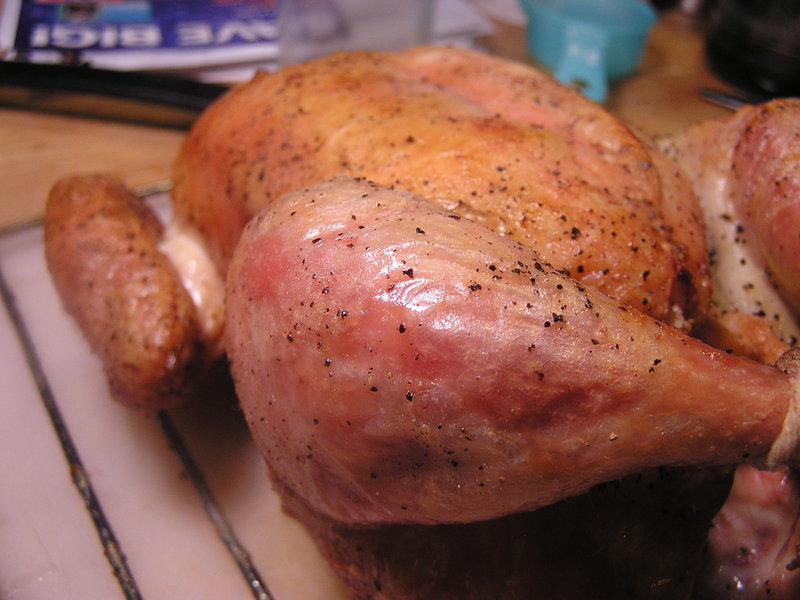
Sometimes I can’t even follow my own train of thought. I was buying some butcher's twine at a kitchen supply store because I figured it was time to learn how to truss a chicken. I had skated around the issue for a year or so because Barbara Kafka had told me not to worry about it. She said it was unnecessary and even detrimental to the cooking process. But maybe that was just for her high heat method . Thomas Keller was telling me to truss; I would learn how to truss.
I came upon the Keller’s recipe in My Last Supper , a beauttiful collection of the theoretical last meals of many a famous chef. Of all the food Mr. Keller could have made, he picked a simple roast chicken. Considering how I love my roast chickens, I figured an easy recipe from one of the nation’s most prestigious chefs would be something to try. The bird had to be trussed. That’s why I was buying butcher’s twine.
I was blabbing about Keller and trussing to the person behind the counter at the kitchen supply store when she just turned to me and said, “Did you see the Cook’s Illustrated recipe this month? There is a roast chicken recipe on how to get the best skin.” Well, now... Quicker than I thought possible, I shelved the Keller bird (to hopefully resume later) and dove in to the Cook’s Illustrated to see what they were up to.
It’s so engaging because the biggest problem I have with roasted chickens is the skin. I’ve had fantastic success with numerous methods, but they’ve all centered around the meat. The above mentioned Barbara Kafka’s high-heat method produces a luscious full-flavored bird, Bourdain’s mix of wine and lemons makes hedonistic mess, and Heston Blumenthal’s absurdly low-heat method leaves the meat completely and unbelievably moist. All, however, seemed to fail in the skin department - especially Blumenthal’s .
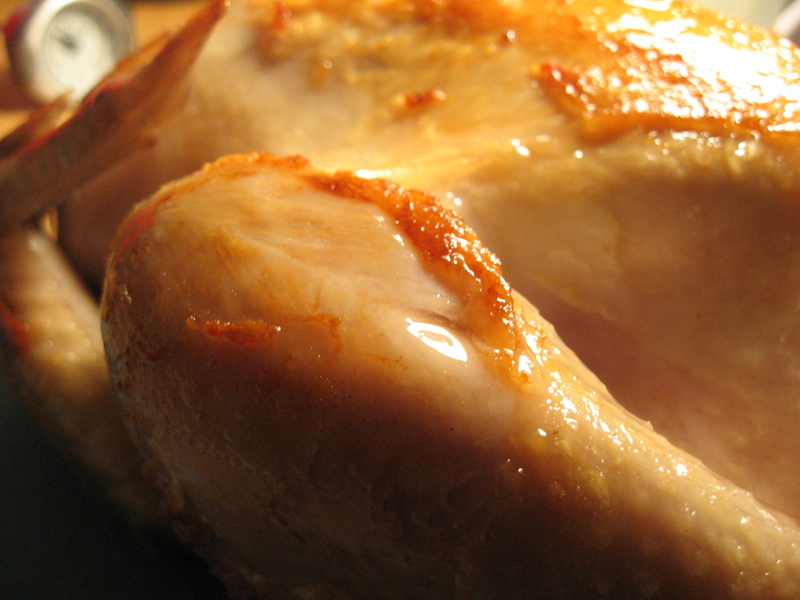
But here was a recipe that attacked the skin head on, which could hopefully produce a full-flavored bird AND some perfectly crisp skin. Their solution is simple, if a bit odd. They cut slits in the bottom of the bird to allow excess fat to drip off, and loosen the skin to prevent fat from collecting on the top while roasting. But the oddest thing they do is cake the skin in baking powder - along with salt and black pepper - and let it sit for a day. The theory is that the baking powder dries out the skin, making it ready to crisp up in the oven.
My experience with baking powder was essentially zero. I just had to take Cook’s Illustrated on their word and give it a go. I had abandoned Keller awhile back, but in a bit of rash workmanship, I ripped the skin along the breast. Trussing helped keep it from tearing more. But the rest of the recipe is all Cook’s Illustrated, and so they get all the credit for the results.
And what results they are. I knew, thanks to the Zuni Cafe bird , that salting the chicken produces a much more developed taste. But the baking powder works. The skin is paper thin and perfectly crispy, and doesn’t taste a bit off, even if it does have the powder on it. It really is remarkable.
Of course, this all means you have to remember to cover the chicken with salt and baking powder a day in advance, something I’m not quite perfect at doing. But this is worth it, and easily the best skin of any bird I've ever touched. The pictures don't quite do it justice.
Crisp-Skinned Roast Chicken
- 1 chicken
- 1 tablespoon salt
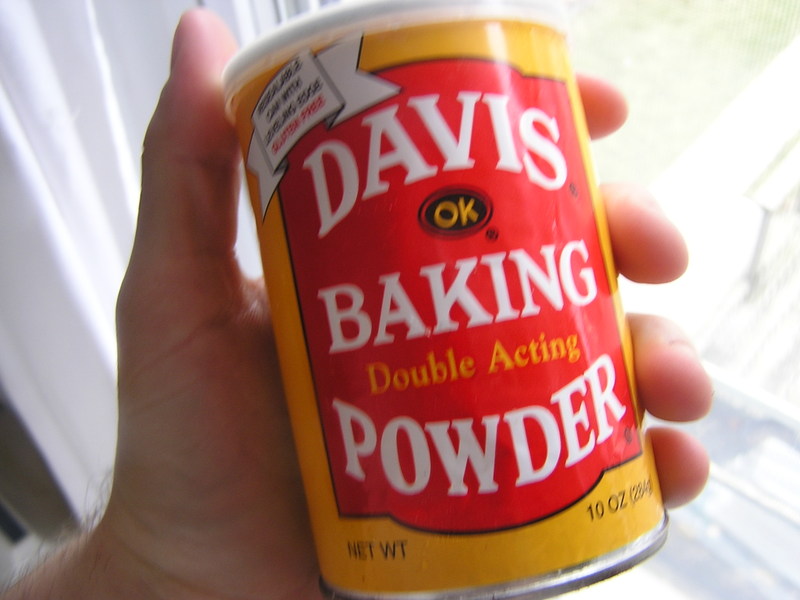
- 1 teaspoon baking powder
- 1/2 teaspoon black pepper
Pat dry the chicken, inside and out.
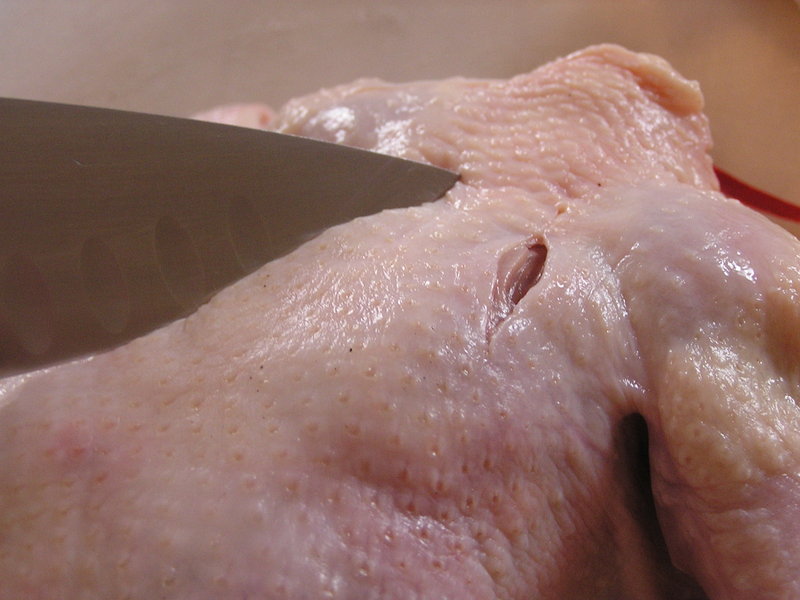
Cut four slits along the back of the bird.
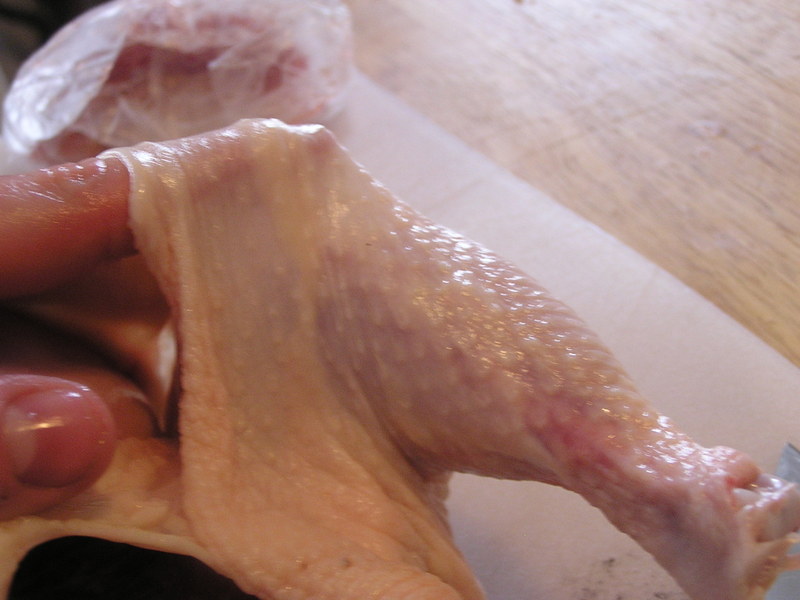
Carefully loosen the skin from the breasts, thighs, and legs. Tuck the wing tips under the bird.
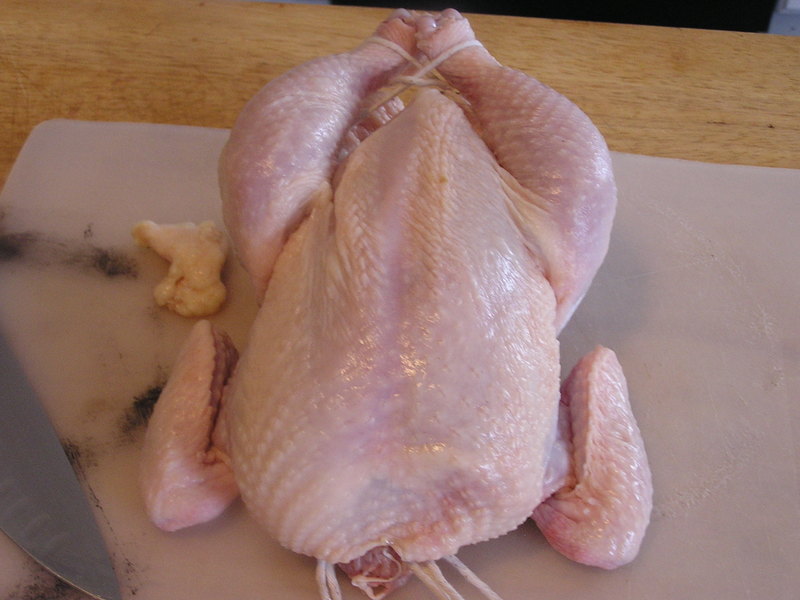
Truss the chicken if you’d like. There is a great video here.
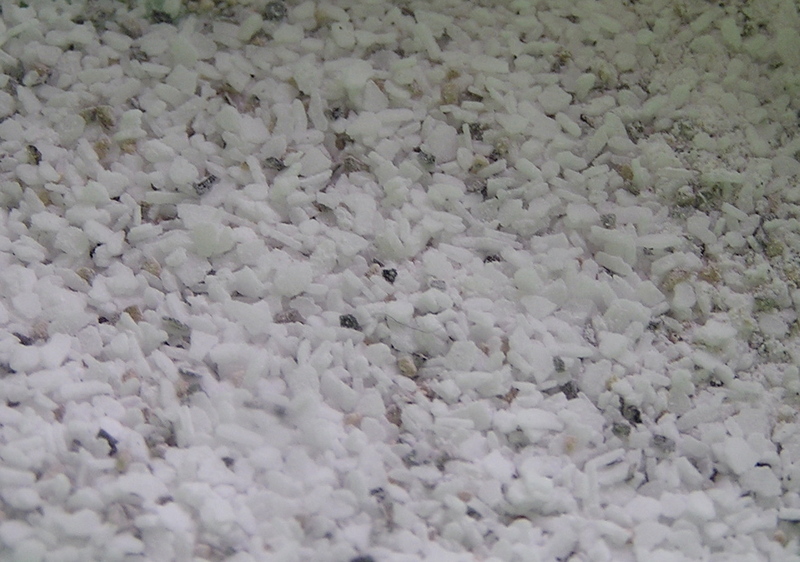
Mix together the salt, baking powder, and black pepper.
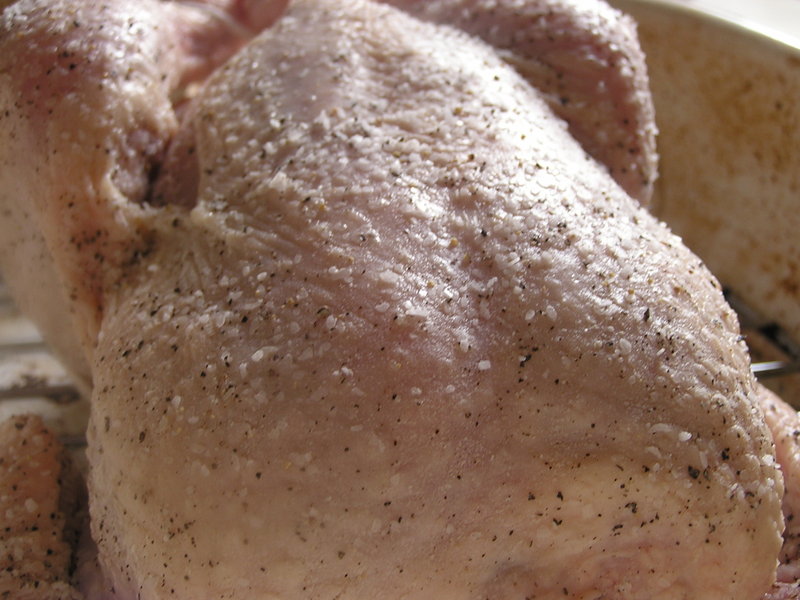
Cover the chicken with the mixture.
Place on a rack in a roasting pan and set in the fridge for one day. Uncovered, of course.
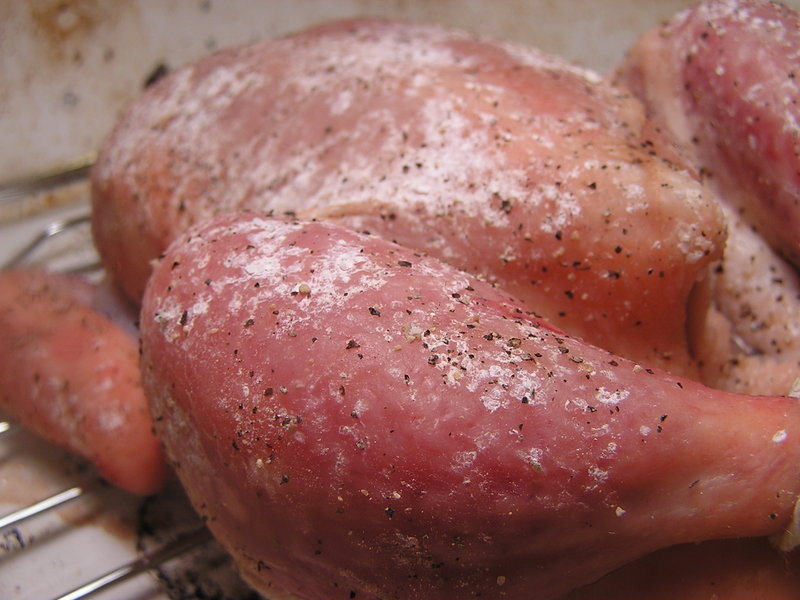
It will look kind of gross after a day. Oh well.
Heat the oven to 450 degrees. When the oven is hot, flip the chicken on its breast and roast on a rack in the roasting pan for 25 minutes.
Flip the chicken breast-side up. Roast until temperature hits 135, about 20 minutes.
Crank the heat to 500 degrees. Cook until chicken is 160 degrees, another 10-15 minutes.
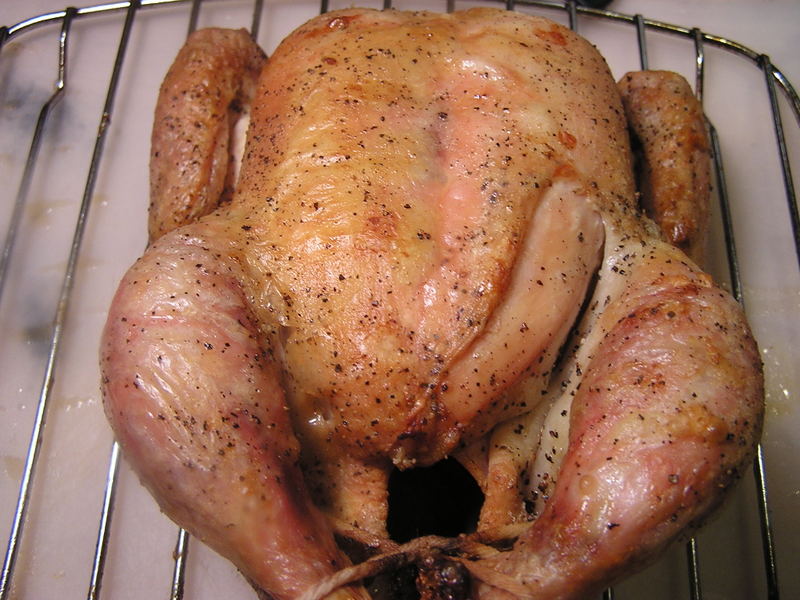
Let it rest before carving in. Admire the skin, and try not to eat too much.
Baking Powder, Chicken, Chicken, Roast Chicken, Roasting
Comments:
Blog Comments powered by Disqus.